

How To Stop Jleeding In A Large Wound On A Animal
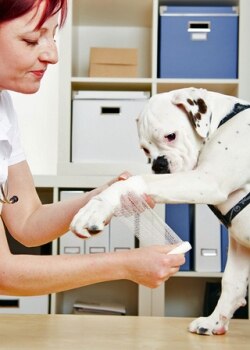
By Arden Moore, a certified pet offset assistance/CPR instructor with Pet Tech , a hands-on training plan. Arden is an author, radio host, and author for Pets Best, a pet insurance agency for dogs and cats.
Dogs can suffer severe injuries where they start profusely bleeding for a variety of reasons. For case, your canis familiaris may get bitten by another animate being, pace on broken glass, or get their nail caught and ripped. So you demand to know how to deed rapidly to finish the flowing claret.
April is National Pet Showtime Help Awareness Calendar month – a good reminder to enroll in a veterinary-approved pet first assist class. In a pet emergency, minutes count. Knowing what to do – and what not to practice – can make the big difference in saving your dog'south life. The purpose of pet first aid is to stabilize and immobilize a pet safely until he tin receive proper treatment by a veterinarian.
Starting time, notation that in that location are three types of bleeding:
- Capillary, characterized past superficial blood oozing, such as from a nick in the tip of the ear or clipping a toenail to shut to the quick.
- Venous, characterized by a slower flow of dark-crimson blood. This is the oxygen depleted blood going back to the heart.
- Arterial, characterized by spurting, bright ruby blood. This is the most serious type of haemorrhage as a canis familiaris who loses more than 30 percent of blood volume in a matter of minutes can develop serious shock.
To go along yourself safe and to administer to your dog who has a serious bleeding wound,follow these vi steps:
1. Muzzle your dog to prevent being bitten; dogs who are frightened or in hurting will often human activity out of instinct- even the nicest dog may seize with teeth when scared. Keep a muzzle in your pet outset-aid kit and one in your automobile. You can employ nylon leashes or big triangle cast to wrap effectually your dog'southward muzzle to still allow him to breathe but not to seize with teeth.
2. Apply direct force per unit area on the wound by using sterile gauze pads. If gauze pads are not available, use a clean t-shirt or towel.
iii. Place another make clean layer of gauze on acme and apply pressure if blood saturates the first layer. Never pull back the start layer as the claret may exist clotting and you risk agonizing the clot causing it to bleed again.
iv. Roll gauze or textile several times effectually the wound and secure it with medical tape. Brand the wrap snug but not so tight that it cuts off circulation, with the exception of arterial haemorrhage. You may demand to tourniquet or wrap the haemorrhage very tightly if the patient is losing blood chop-chop with an arterial bleed.
five. Contact the nearest veterinary clinic and alert them how far away you lot are so that the staff tin can prepare an exam room for your dog.
6. Monitor your dog for signs of shock during the drive (have someone else drive while you lot are with your secured dog). Signs of stupor include a fast heart rate, weak pulses and pale gums.
Source: https://www.petsbest.com/blog/6-tips-stop-severe-bleeding-in-dogs/
Posted by: lizotteesethe.blogspot.com
0 Response to "How To Stop Jleeding In A Large Wound On A Animal"
Post a Comment